Monday, April 20, 2015

Mocktail Season Has Arrived

http://images.huffingtonpost.com/2015-04-20-1429540056-6709390-GingerRootMocktailwithceleryrootjuicespicedcordialfreshlimeandgingerbeer-thumb.jpg The boom in handmade non-alcoholic drinks.

It isn't sufficient that we have mastered the art of eating seasonal kale or succumbed to the charms of happy chicken or pork on our plate. In the relentless march of food as fashion, there is another fascinating front to explore.

Beverages.

A critical part of the dining landscape -- from curated wine pairings and cocktails to the explosion of craft beers and the proliferation of teas, water and juices -- we enjoy liquid refreshments throughout the day.

There is a growing interest in the area of creative non-alcoholic drinks, many of which embrace a dedication to seasonality or use ingredients spawned by the artisanal food movement. Think back to when shirley temples, virgin daiquiris, Cel-Ray and egg creams ruled. Fueled by a new generation of mixologists, mocktails are mainstream and no longer just for kids, teetotalers or pregnant women. They are delicious and innovative - and perfect for the warm weather months, challenging traditional iced tea and lemonade.

What do you need to know? Beverage and ingredient terminology can be unfamiliar. Here are some of the basic terms you will hear:

Shrubs are making a splash in the craft cocktail scene. Known as drinking vinegars, these are a wonderful addition to cocktails and mocktails alike, as they add a sweet, tart, bitter and acidic layer to your drink.

To make: Ferment any ripe fruit of your choice -- blackberries, pineapples, raspberries, peaches, anything -- by coating with equal parts sugar. Cover and refrigerate for 24 to 48 hours, when the sugar will break down the solid fruits into liquid. Strain and add vinegar. Conventional shrub recipes call for equal parts vinegar. We recommend using as much or as little as you prefer. My favorite types of vinegar are Normandy Champagne and apple cider, which give your shrub a cleaner, more fruit-forward taste.

A cordial is another term for "fruit-based liquid," and is generally thought of as an alcoholic liqueur. To make: boil 1 part water, ½ part sugar and 1 part ripened fruit/vegetable and/or herb at medium-low heat for 20 minutes. Let cool and store in a glass bottle. For a more complex, molasses-like taste, use Demerara or turbinado sugars in place of white cane sugar.

Infusions are the magic that happens when you steep fruit, vegetables or herbs in your base liquid or spirit, imparting flavors and creating a life on its own.

Syrups are common in cocktail bars and very easy to make at home. The most common -- simple syrup -- is equal parts sugar and water. For more intricate syrups, try infusing mint or basil in a mixture of equal parts hot water and sugar and steep for 20 minutes, so that the syrup imparts all of the flavors of the herb.

Dehydration is a great way to both preserve a short season ingredient (peaches, citrus) or to create a garnish with an intense flavor profile (pineapple, rhubarb, apple). You can dehydrate thinly sliced fruit, vegetable or herb in an electric dehydrator in your home, or use your oven on a low temp to accomplish the same result.

A well-balanced drink utilizes 5 main components:

Base spirit -- which we omit for our mocktails

Sweetener -- simple syrup, juice, straight up sugar (provided by the shrub). Substitutes for sugar include agave or honey. Suggested sugars include white granulated or the more upscale turbinado or Demerara, which add more complexity to the drink (smoke, a more caramel quality flavor.)

Sour -- citrus, lime, lemon, grapefruit (provided by the shrub)

Herb -- basil, mint, rosemary, cilantro

Water -- fizzy, or shaken into the drink over ice

I recruited my colleague, Luis Antonio Thompson, director of beverage innovation at Great Performances, to provide us with a few sample recipes, taking inspiration from our impending spring.


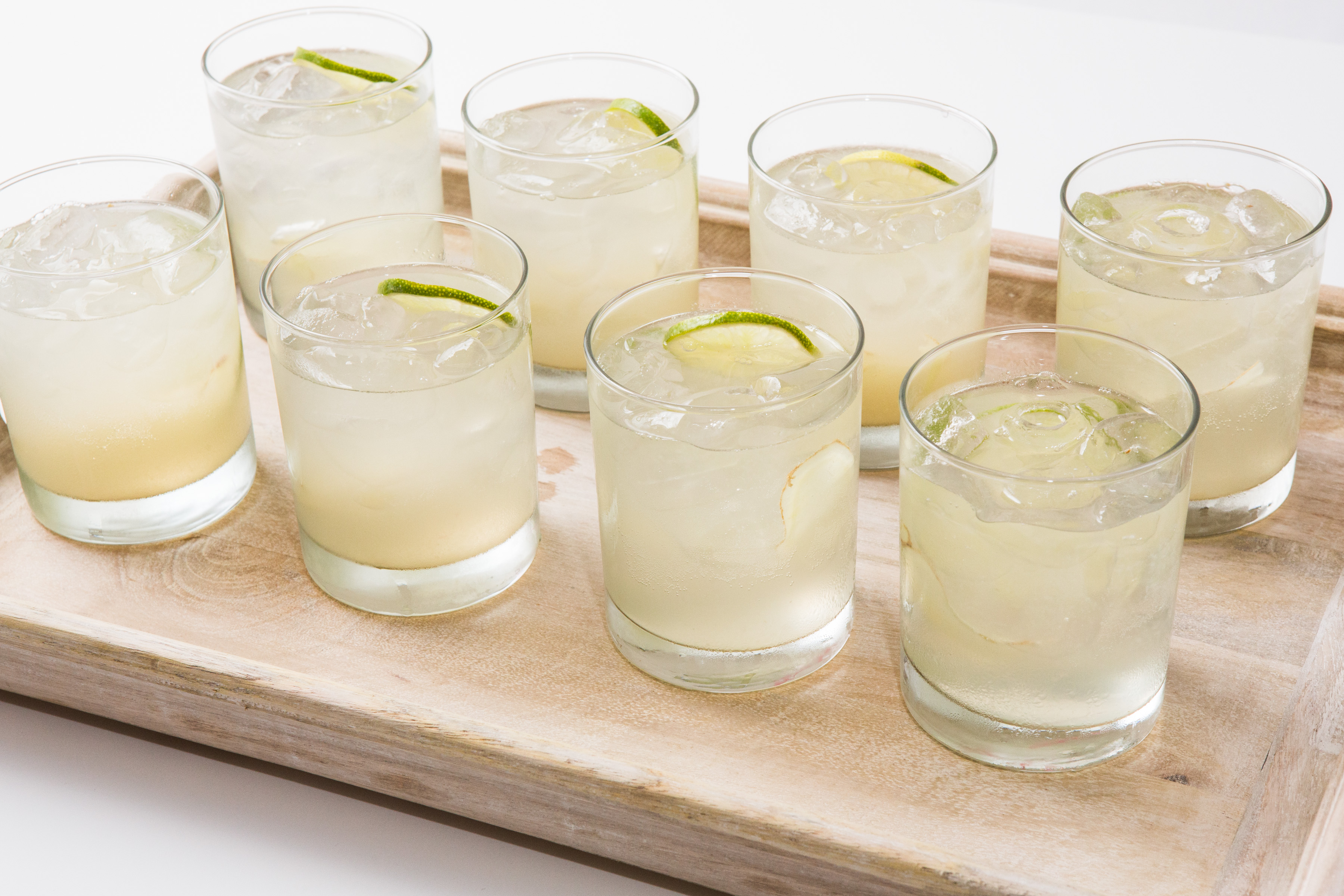
Ginger Root: Celery Root Juice, Spiced Cordial, Fresh Lime, Ginger Beer
2015-04-20-1429540056-6709390-GingerRootMocktailwithceleryrootjuicespicedcordialfreshlimeandgingerbeer.jpg

INGREDIENTS (serves 1):
3 oz. celery root juice (available at supermarkets or by juicing a root)
½ oz. spiced cordial (recipe below)
Squeeze of ¼ lime
2 oz. ginger beer
Lime wedge

Add all ingredients in shaker with ice; give light shake; pour into glass; garnish with lime wedge.

To spike: add 1 oz. spiced rum for every 3 oz. ginger root

To make Spiced Cordial:
2 cinnamon sticks
6 medium star anise
4 whole cloves
2 cups turbinado sugar
2 cups water

Boil all for 10 minutes on medium low heat
Let cool; strain into clean glass bottle

Yields 16 oz. (2 cups)


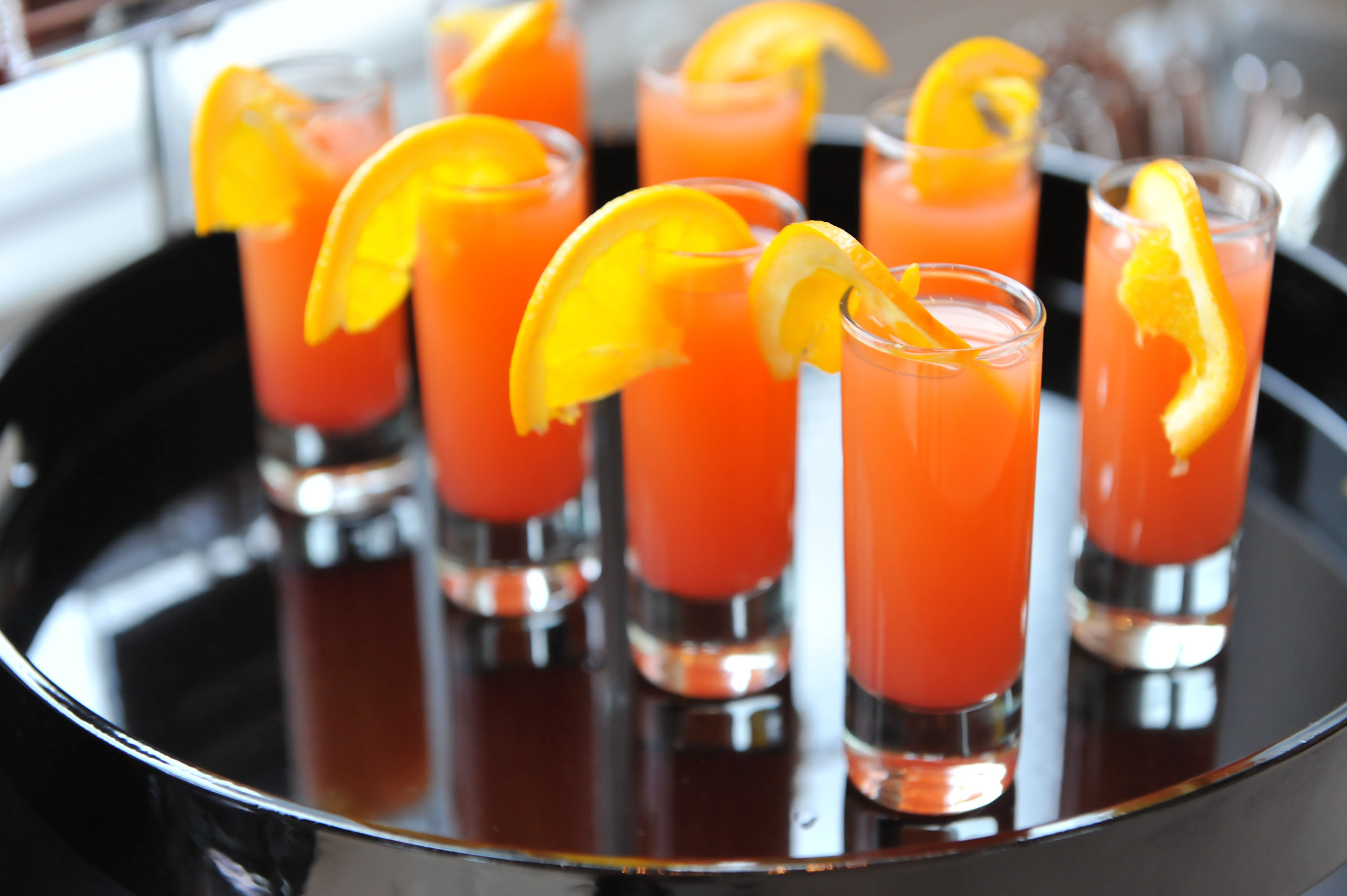
A Wonderful Thyme: Organic Thyme-infused Citrus-ade
2015-04-20-1429540198-2356039-AWonderfulThymeMocktailwithorganicthymeinfusedcitrusade.jpg

INGREDIENTS (yields 1 gallon):
1 ½ pints Demerara sugar
1 ½ pints water
1 ½ cups organic thyme leaves (approx. 4 bunches thyme without stems)
1 pint chilled fresh lemon juice
½ pint fresh squeezed orange juice
½ pint fresh squeezed lime juice
4 ½ pints water

Serve in 5 oz. tumblers with ice.

To spike: add 1 oz. organic vodka for every 4 oz. organic thyme-infused citrus-ade

To Make an Infusion:
Boil 1 ½ pints Demerara sugar, 1 ½ pints water, and thyme leaves for 10 minutes. Let cool and set aside. Once cool, mix with 1 pint chilled fresh lemon juice, ½ pint fresh squeezed orange juice, ½ pint fresh squeezed lime juice, and 4 ½ pints water.

Yields approx. 1 gallon thyme-infused citrus-ade.


Diced Pineapples: Pineapple Shrub, Fresh Mint, Sparkling Mineral Water, Pineapple Spear

INGREDIENTS (serves 1)
¾ oz. pineapple shrub (recipe below)
4 mint leaves
3 oz. sparkling water

Build in shaker with ice; give light shake; pour into glass; garnish with mint sprig.

To spike: add 1 oz. Kentucky bourbon for every 3 oz. diced pineapples

To make Pineapple Shrub:
2 pineapples cut into cubes
8 cups sugar to fully coat

Let sit 2 days; strain liquid from pulp
Yields 7 cups syrup liquid
Add 5 ¼ cups ponzu citrus vinegar


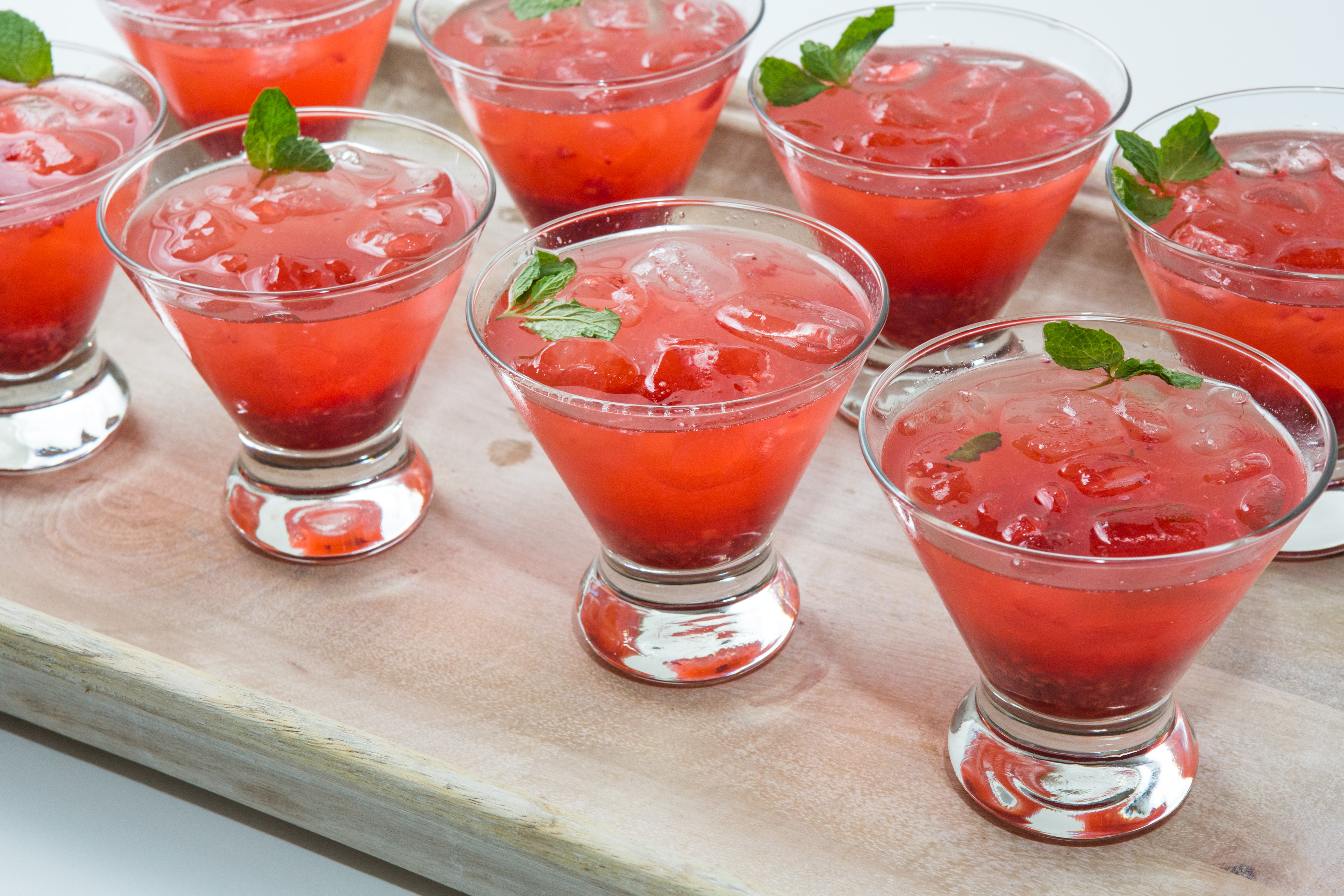
Rhubarb Basil Sparkler: Rhubarb Basil Syrup, Fresh Squeezed Orange Juice, Club Soda, Basil Leaves
2015-04-20-1429540283-911475-RhubarbBasilSparklerwithbasilandfreshsqueezedorangejuice.jpg

INGREDIENTS
1 oz. rhubarb basil syrup (recipe below)
1 oz. fresh squeezed orange juice
4 oz. club soda
basil leaves

Add all ingredients in tumbler with ice. Garnish with basil leaves.

To spike:
Add 1 oz. Limoncello to 4 oz. rhubarb basil sparkler.

To make Rhubarb Basil Syrup:
2 lbs. rhubarb
2 cups water
2 cups sugar
20 basil leaves

Wash and slice rhubarb into 1-inch cubes. In a pot, add rhubarb, water, and sugar. Bring to boil and simmer until rhubarb is soft, approximately 10 - 15 minutes. Remove from heat, add basil leaves and let sit + cool for 30 minutes. Yields 2 cups rhubarb basil syrup.


L'Chaim!


This piece was originally published in Our Town.

-- This feed and its contents are the property of The Huffington Post, and use is subject to our terms. It may be used for personal consumption, but may not be distributed on a website.


from http://www.huffingtonpost.com/healthy-living/

What to Do When You Have Too Many Ideas (And Not Enough Time)

http://ifttt.com/images/no_image_card.png What do you do when you have too many ideas and not enough time? Or similarly, what about when you have too many tasks and not enough energy?

As an entrepreneur, I feel like I've been battling this issue for awhile. There is always another opportunity to chase or a new product idea that sounds exciting. For a long time, I felt guilty about ignoring good ideas that came my way and so I kept adding more to my to-do list.

However, during a recent conversation with Travis Dommert, I learned about a new strategy for dealing with the issue of having too many ideas and projects.

It all comes down to treating your life like a rose bush.

Let me explain what Travis taught me...

Ideas Are Like Rose Buds

As a rose bush grows, it creates more buds than it can sustain. If you talk to an experienced gardener, they will tell you that rose bushes need to be pruned to bring out the best in both their appearance and their performance.

You see, a rose bush isn't like a tree. It can't grow wider and taller each year. And that means if you never trim away some of the buds, then the bush will eventually exhaust itself and die. There are only so many resources to go around. And if you really want a rose bush to flourish, then it needs to be trimmed down not just once, but each year. [1]

Ideas are like rose bushes: They need to be consistently pruned and trimmed down. And just like a rose bush, pruning away ideas -- even if they have potential -- allows the remaining ideas to fully blossom.

Just like the rose bush, we face constraints in our lives. We have a limited amount of energy and willpower to apply each day. It's natural for new ideas and projects to come into our life -- just like it's natural for a rose bush to add new buds -- but we have to prune things away before we exhaust ourselves.

In other words: New growth is natural, and it's normal for tasks and ideas to creep into your life, but full growth and optimal living requires pruning.

We All Need to Cut Good Branches

I like the rose bush analogy because it brings up something that is often lost in most conversations about productivity and simplicity: if you want to reach your full potential, you have to cut out ideas and tasks that are good, but not great.

In my experience, this is really hard to do.

  1. If you're building a business, maybe you have three product lines that are profitable. Your business might grow by five times if you focus on all three, but which product line will grow by 500 times if you put all of your energy into it?

  2. If you're training in the gym, there are all sorts of exercises that could make you stronger. But which two or three exercises will build a foundation of strength better than anything else?

  3. If you're thinking about the relationships in your life, there are dozens of people that you are connected to in some way. But which people bring energy into your life and which ones suck energy out of it?


Most rose buds could grow if they are given the chance. In other words, most buds are like a good idea: They have potential. But in order for the entire bush to flourish and live a healthy life, you have to choose the ones with the most potential and cut the rest.

The Bottom Line

Gardener and writer Elizabeth Roth says, "Roses that are left unpruned can become a tangled mess of old and new canes all competing for air and light." [2]

We can say the same thing about our lives. A life left unpruned can become a twisted knot of ideas, tasks, and projects competing for your limited time and resources. If you don't prune some of the branches from your life, the important ones will never flourish.

James Clear writes at JamesClear.com, where he shares science-based ideas for living a better life and building habits that stick. To get strategies for boosting your mental and physical performance by 10x, join his free newsletter.

This article was originally published on JamesClear.com.

Thanks again to Travis Dommert for sharing the rose bud analogy with me.

-- This feed and its contents are the property of The Huffington Post, and use is subject to our terms. It may be used for personal consumption, but may not be distributed on a website.


from http://www.huffingtonpost.com/healthy-living/

What's Missing From the Obamacare Debate?

http://ifttt.com/images/no_image_card.png By the time you read this article, I will be on my way to Kansas City, MO or heading back home to Louisiana after volunteering at a massive free medical clinic. This is not my first time working with the National Association of Free and Charitable Clinics (NAFC) as a volunteer and definitely won't be my last for several reasons. Firstly, I enjoy volunteering and assisting the hundreds of medical and non-medical staff who simply come out to help those who can't access quality affordable health care. Secondly, even if the Affordable Care Act (ACA) aka Obamacare were to roll out flawlessly, there will still be millions of hard working Americans who can't afford health insurance.

As the Supreme Court prepares to decide the future of the ACA, the conversation has focused on the potential impact of the outcome. Specifically, that striking down federal subsidies for policy holders could create a nation of haves and have nots -- those with coverage and those without. What's lost in this debate is that when it comes to health care coverage, this already is a nation of haves and have not's, and the ACA hasn't solved that. The law does a great job for some people, but it leaves an incredible number of hard working Americans -- as many as 30 million, as estimated by the Congressional Budget Office -- falling through very large cracks.

As of March 2015 16 states have opted out of expanding Medicaid, leaving large gaps in coverage available for nearly 4 million adults. Lacking other options, many of these patients are currently receiving care in one of America's 1,200 Free or Charitable Clinics, which are part of the NAFC. These organizations -- which provided over 6 million patients visits last year alone -- are driven by a volunteer workforce of doctors, dentists, nurses, therapists, pharmacists, nurse practitioners, technicians and other health care professionals.

After volunteering for my sixth massive one-day clinic, I truly understand their significance. One of the most common misconceptions about how the United States will look after the full implementation of the Affordable Care Act (ACA) is that there will no longer be a need for these clinics to continue to provide charity care as a member of the safety net. Nothing could be farther from the truth. Despite the implementation of Obamacare, many of the clinics have seen a 40 percent increase in patient demand over the past two years.

A 2014 Kaiser Family Foundation update reported that two-thirds (66 percent) of people in the coverage gap are in a family with a worker and 54 percent are working themselves. These patients aren't freeloaders. They are hard-working people. They are people with jobs -- often more than one -- who are trying to take care of their families. They are freelancers and millennials; they are service industry workers, professionals, and everyone in between. Most importantly, they are people who shouldn't be financially ruined just because they need to pay for a health care expense.

In states that have expanded Medicaid, there may be some relief when it comes to purchasing health insurance given that adults under the age 65 can earn up to 138 percent of the federal poverty level and qualify for Medicaid. However the federal poverty level for this year is only $11,670 for individuals, which means one would need to earn less than $16,243 to receive Medicaid coverage. This is hardly wealthy by most standards.

The ultimate irony is that under the ACA, people earning more than $16,243 can receive subsidies to purchase insurance through the exchanges and to lower their out-of-pocket costs. However, individuals are still reporting to our clinics that even with the subsidies they can't afford medication, find a doctor for a timely appointment and can still not access dental care. In fact 70 percent of our clinics are reporting that patients are returning to them for help even after that have found coverage.

The Affordable Care Act was just a first step in providing access to affordable health coverage for some Americans; it was not a final step in providing care for ALL Americans. Currently in our health care system there are those who still have to make the choice between putting food on the table or paying for health care. For them, it is quite literally a matter of life and death. For those people, I will continue to volunteer and the Free and Charitable Clinics will still be here, continuing to build a healthy America, one patient at a time.

-- This feed and its contents are the property of The Huffington Post, and use is subject to our terms. It may be used for personal consumption, but may not be distributed on a website.


from http://www.huffingtonpost.com/healthy-living/

'Waltons' Actress Mary McDonough Shares The Tough Lesson She Learned From A Bad Boob Job (VIDEO)

http://big.assets.huffingtonpost.com/FBLOGO_0.png Growing up on a television show can be a difficult process for a young star. For more than a decade, Mary McDonough played middle daughter Erin on "The Waltons," and says she struggled with her body image as she matured. When the show ended in 1981, the pressure to look perfect didn't dissipate -- McDonough says she kept losing roles to women with bigger hair and bigger breasts. So, the actress decided to get breast implants.

After that, in 1995, McDonough was diagnosed with Lupus, which she believes was a result of her breast implants. She says she never intended to be "a poster girl for bad boob jobs," but has been compelled to become an activist for women's health issues. An important part of McDonough's message is the psychological aspect of breast augmentation, which she openly shares in the above video from "Oprah: Where Are They Now -- Extra."

"If I had to give advice to anyone who is considering plastic surgery or changing themselves externally somehow, I would say a couple of things," McDonough says. "One... Go inside, be quiet and sit, and really ask yourself, 'Am I doing this for me?'"

It's a question McDonough wishes she had reflected upon more herself so many years ago. "A lot of times, what happens is we change something about ourselves thinking it's going to give us self-esteem, but guess what? You're still there with you," she says.

Her next bit of advice is about women educating and empowering themselves before making any medical decision.

"Do your own research. Take your health by the hands, and just hold it tight," she says. "Only you can help yourself -- with your doctors, with doing research. Find out what the negative implications can be."

Though she is an outspoken activist and lobbyist for informing women of the risk of implants, McDonough insists that she's not against breast augmentation.

"A lot of people think I'm anti-implant," she says. "I'm not. What I lobbied for was a safe implant, so that people who want to make that choice -- or who have had breast cancer and want to make that choice -- have something safe. So, I'm not the crazy person everybody thinks."

On the contrary, McDonough points out she's in a position to give honest advice to anyone considering plastic surgery.

"Of all people, I understand why somebody would want to change. I wanted to change me," she says. "The myth was, if I could attain this unrealistic body image, that somehow I would be happy. It's just not true. Because no matter where you go, there you are."

Related: Mary McDonough recalls the advice from costar John Ritter that helped her stop starving herself before a bathing suit scene.

"Oprah: Where Are They Now -- Extra" is a web-based spinoff of the OWN show "Oprah: Where Are They Now?", which returns with new episodes on Saturday, April 25, at 9 p.m. ET.

style type="text/css">@media only screen and (min-width : 500px) {.ethanmobile { display: none; }
}

Like Us On Facebook |
Follow Us On Twitter

-- This feed and its contents are the property of The Huffington Post, and use is subject to our terms. It may be used for personal consumption, but may not be distributed on a website.


from http://www.huffingtonpost.com/healthy-living/
'How a Two-Pound Baby Changed the Direction of My Life'

http://images.huffingtonpost.com/2015-04-20-1429538475-906493-RFK_4_20.jpg This post is part of the Relay for Kids in partnership with SOS Children's Villages. Each time you share this post, Johnson & Johnson will donate $1 (per action) to support children worldwide affected by crisis. Scroll to the bottom to find out more.

This past year was a particularly horrific one for children.


In 2014, the Ebola virus, the continuing combat in war-torn Syria and natural disasters left children in several corners of the world traumatized at best, and orphaned at worst. Perhaps reading about these sobering events has moved you to take action, and if so, I'm right there with you.


In 2007, I was part of a team that hatched an idea several years previously in a classroom. As part of a design school course I was taking while doing my MBA at Stanford, we were challenged to build an incubator that cost less than 1 percent of the price of a state-of-the-art incubator. My classmates and I were floored by the ambition of this challenge, but we jumped in anyway. By the end, we had actually developed a product that met the criteria and was suitable for developing countries, where most of the world's preterm babies are born.


So we set to work prototyping, calling our invention the Embrace Infant Warmer.


The whole team moved to India, home to 40 percent of all the world's pre-term and underweight children, and the country I would live in for the next four years. By 2012, our idea had grown into both a nonprofit and a for-profit social enterprise devoted to helping mothers, babies and clinics throughout the developing world. Our innovation was having a real impact on the lives of preterm babies in the developing world, and I had the chance to witness the grateful tears of mothers face-to-face. I had the opportunity to see that a mother, no matter how poor, or impoverished or uneducated, will do anything to save her child -- and to witness every day the most beautiful and selfless form of love in the world.


It was deeply moving work, work that I felt incredibly fortunate to be a part of.


Now, as any entrepreneur -- especially one in the social enterprise space -- can tell you, there are distinct sacrifices that come with the job. As Embrace (our nonprofit) and Embrace Innovations (our for-profit arm) were growing and I was taking on more responsibility, while at the same time living in a place halfway around the world that was far away from my home, friends and family, I began to seriously assess these sacrifices, and wonder if I was truly up for the challenge.


It was at that precise moment that baby Nathan was discovered.


Nathan was a tiny baby, born at just under two pounds. He was abandoned on the side of the road in central China just after his birth, and the odds were so severely stacked against him that he shouldn't have survived at all. Miraculously, he was discovered by a nearby orphanage (Little Flower Orphanage), with whom we had just launched a program a few days earlier. They had an Embrace Warmer on-hand, which they kept Nathan in for 30 days. Thanks to the warmer and Little Flower's loving care, this teeny, hypothermic infant survived! It was the first time a baby of that size had survived in the orphanage, and when I went to visit him at seven months old, I found a healthy, interactive baby boy.


Visiting the orphanage and meeting Nathan for the first time made a huge impact on me. It was amazing to witness the strength and resilience of this little boy, who fought for his life and survived. A few months later, I received an email from a family in Chicago telling us they had adopted Nathan. Nathan now had a family! It was one of the happiest days in this journey, and honestly, in my life.


Nathan's story is one of over 150,000+ babies who have been helped by the Embrace Warmer so far across 10 countries.. But get this statistic: Every year, more than one million babies die on the day of their birth.


As children like Nathan have taught me, many of these babies don't have to die. Here in the U.S., we have access to the best medical resources in the world. But in developing countries, where most of these deaths occur, babies (and their mothers) aren't so lucky.


I believe our society should be measured by the way we care for the most vulnerable beings in our world. So I see it as our responsibility to help even the scales, and to commit our considerable resources, innovation, creativity and problem-solving to children who just so happened to be born into less fortunate circumstances. My life is devoted to being a children's advocate, and it's survivors like Nathan who inspire me every day and make every moment of my work so worthwhile.


By sharing, you make a difference for kids in crisis: From March 23 until April 24, each time you 'like' or share this post via the social media icons above or comment in the section below, Johnson & Johnson will trigger a $1 donation (per social action) to SOS Children's Villages, the world's largest organization dedicated to orphaned or abandoned children, up to $30,000*. $1 provides food, shelter and medical care to a child in crisis. In addition, you can also Donate A Photo** and Johnson & Johnson will donate $1 when you upload a photo for SOS Children's Villages -- you can help raise up to $20,000 in seconds with the click of your mouse or snap of your smart phone.

Johnson & Johnson, SOS Children's Villages and The Huffington Post created the Relay for Kids to support children around the world who have been affected by poverty, conflict, disease and natural disasters. Visit www.sos-usa.org/relayforkids to learn more.

*Blogs must be shared between March 23 to April 24, via Facebook, Twitter, StumbleUpon, reddit, Tumblr and Google+ from the Huffington Post. Each share will trigger a $1 donation up to $30,000. There are no limits on how many times you can share a post.

** via the Donate A Photo app for iOS and Android. Johnson & Johnson has curated a list of trusted causes, and you can donate a photo to one cause, once a day. Each cause will appear in the app until it reaches its goal, or the donation period ends. If the goal isn't reached, the cause will still get a minimum donation.


Editor's Note: SOS Children's Villages is a partner of Johnson & Johnson, which is a sponsor of The Huffington Post's Global Motherhood section.

2015-04-20-1429538475-906493-RFK_4_20.jpg

-- This feed and its contents are the property of The Huffington Post, and use is subject to our terms. It may be used for personal consumption, but may not be distributed on a website.


from http://www.huffingtonpost.com/healthy-living/

The Tyranny of Panic Attacks: Healthy Tips for Coping

http://ifttt.com/images/no_image_card.png About 6 million American adults experience a panic attack every year. Panic attacks are bi-products of anxiety that occur regularly or intermittently. Either way, they are frightening to say the least. Panic attacks can cause major disruptions in people's lives and left untreated, may cause deterioration of social and occupational functioning.

Panic attacks are associated with an unmistakable period of intense fear and distress accompanied by multiple physical and mental symptoms. The mental symptoms can be paralyzing and create fear and confusion. The mind becomes overwhelmed with disturbing thoughts of danger, imminent death, and going crazy. The physical symptoms happen suddenly and peak rapidly, seizing the body and causing discomfort.

However, interestingly enough panic attacks are also very treatable, and there are many helpful coping tools individuals can engage in immediately, or during a panic attack that can help reduce symptoms on a consistent basis. How do I know I am having a panic attack?

Cognitive

- Fear of dying
- Thoughts of going crazy,
- Fear of a heart attack or some other severe, hidden illness
- Fear of losing control and humiliating oneself in public
- Fear of the next big panic attack, etc.
- Feeling weak and inferior

Physical

- Rapid heart rate/palpitations
- Labored breathing/shortness of breath/hyperventilation
- Trembling or shaking
- Nausea or abdominal distress
- Choking sensation
- Chest pain
- Sweating
- Numbness or tingling sensations in fingers and toes
- Lightheadedness/dizzy/unsteady
- De-realization (Feeling detached from reality)
- De-personalization (Feeling detached from your body)

Tips:

Ground yourself:

Grounding yourself in a concrete task can be helpful to distract the mind from your racing negative thoughts. Grounding de-escalates your symptoms via healthy diversion. For example, run your fingers along the teeth of your house keys, squeeze a stress ball or hold an ice cube in your hand for as long as you can, then switch to your other hand. You can also engage in a chore, like cleaning or tidying up your home, anything to keep your mind focused on something else. Remember, the mind cannot be in two places at once.

Use "thought replacement" exercises:

Identifying your negative thoughts and then replacing them with rational ones also works to de-escalate the severity of our symptoms. It's a process of learning to be more reflective than reactive. Reflecting instead of reacting switches your mind from being a victim of your thoughts to being an observer of your thoughts. It takes some practice but in the end, it helps a great deal.

Accept your anxiety:

Contradictory as it sounds, acceptance of the unacceptable is key here. We are not saying to surrender to your panic and let it take over your life, but allow it to run its course. Don't try to accelerate your healing. The more people fight it, the harder it is to overcome. Acceptance can also mean it's time to look inward and see what areas in your life might be fueling the anxiety. So, you don't give up the cause to get well, but you accept the fact that you are anxious today and that the anxiety might stick around for a while. A good acceptance motto is: "It's not danger, it's discomfort."

Educate yourself on the anatomy of a panic attack:

Learning why you are having symptoms helps a lot too. Read up on the flight, flight or freeze response system that all living organisms have. It's an adaptive function placed there by God, the universe, evolution, etc., to protect the body from harm. The more you learn about how anxiety is not fatal and does not cause people to go crazy is very important to know. The more you understand about your condition, the better you will feel.

Create structure:

Spending your days idle without structure will cause you to over-magnify your negative thoughts. The mind is not built to be idle and unstructured. And couch "potato-ing" at home in front of the TV and "white knuckle-ing" your symptoms hoping they will go away is a mistake. Consider the directive: "Move a muscle, change a thought." Don't stay in bed all day. Get up at a reasonable hour and make sure you go to bed at a normal time as well. During the day, plan on doing some light exercise like walking or riding a bicycle (can be a stationary bicycle too). Plan to engage with people at least one time per day too. Meet a supportive friend or relative for lunch, etc.

Here are a few things to avoid:

Do not believe everything you think:

In the midst of a panic attack, don't assume that what you are thinking is actually true. Panic attacks cause catastrophic thinking which means your thoughts are most likely irrational and out of proportion to reality in the moment. And, although they sometimes say, "trust your gut," with a panic attack, it is not a good idea. Also, don't put so much importance on your thoughts. Just because you are having a thought, any thought, does not mean you have to pay attention to it. Thoughts are random and sometimes insignificant.

Do not fight it:

Don't assume that resisting and fighting your condition is going to help. Don't assume that a panic attack leads to fainting or losing control of yourself. Don't assume it will lead to psychosis or "going crazy." And, don't assume that it will cause a heart attack or some other serious illness. Typically, panic attacks are caused by an excess of adrenaline and other natural chemicals in the body. Symptoms of panic attacks are not fatal and they don't lead to "losing your mind."

Do not isolate and initiate "avoidance" behavior:

Withdrawing from people and isolating in your home is also not a good idea. The more you keep the anxiety bottled up and unexpressed, the worse it gets. Also, avoidance behavior by staying in your home 24/7 will begin to make your world smaller and smaller. Then, leaving your home for work or school or even for minor errands will begin to get harder and harder.

Do not stigmatize yourself:

Don't call yourself weak or inferior because you are suffering from panic attacks. Don't tell yourself you should be "handling" this better. Or that "a stronger person" wouldn't have this problem. Anxiety disorders are real, legitimate conditions that must be reckoned with. The more you see yourself as a failure because you are suffering, the worse you will feel in the long run.

Do not self-medicate:

Using alcohol or any other mood-altering substance could potentially induce more panic. For example, after the sedating effect of alcohol wears off, your panic will come back two-fold. The hangover the next day will not be pretty. Also, regardless of what people say about marijuana today, if you are suffering from panic attacks, it can exacerbate anxiety levels and could make you paranoid. Marijuana is a "reality" altering drug that can impair your ability to think clearly and be rational. Also, do not drink any caffeine whatsoever. Drinking caffeine while having panic attacks is like pouring gasoline on a fire.

-- This feed and its contents are the property of The Huffington Post, and use is subject to our terms. It may be used for personal consumption, but may not be distributed on a website.


from http://www.huffingtonpost.com/healthy-living/

Is Psychiatry Getting Kinky?